The Battle of the Flame and the Ember
The changing self that endures
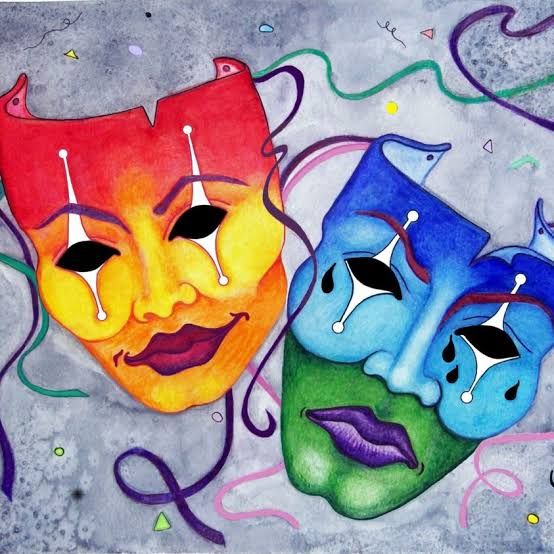
Social battery goes up and down, sometimes fluctuating wildly. Recently, I began to wonder what determines its course. What creates the difference in the shift between the extroverts and the introverts?
For most of my life, I’ve classified myself as an extrovert. I recognise how my mood shifts during social interactions, how my social-butterfly self automatically takes the wheel. But recently, it feels like that version of me wants to retire a little. A difference in my usual pattern has caught my attention. I can’t spend as much time socialising as I once did, and honestly, not only out of obligation but also by preference. When I exceed my limit, it feels like torture. Yet, if I remain around people, their presence still triggers my extrovert self, making me feel like I have to talk, as though silence would betray my nature.
So tonight I decided to set a stage to confront a question that has stirred through every human life:
If we are adaptive by nature, does that adaptability reach into the soul of how we connect, the outward call and the inward retreat that shape our being? And if it does, are we touching the edge of our highest becoming, or casting aside what was destined to endure?
To answer, I have called not upon random examples, but upon the origins themselves. Ladies and gentlemen, I present our guests: the Extravert and the Introvert, arriving from their beginnings to take the stage.
Give it a big applause because here’s the legend, the sunshine, the one whose roots reach toward others as naturally as lungs reach for air. I present to you the one and only Extravert.
Owing to its nature, the Extravert enters the stage only when the applause has swelled to the size of the biggest audience.
The host asks for a quick welcoming sentence from our first guest. The Extravert, of course, doesn’t stall to reply:
“I am born of sunlight and open air. My pulse quickens in the heat of voices, my roots spread where the crowd gathers. To me, solitude is hunger; connection is food. Tell me, can any environment starve me into silence, or would I always find my way back to the noise?”
The crowd replies with another heavy applause, then is hushed by the host.
The host invites the second guest to the stage.
“Now I invite the most inward soul to speak louder. Ladies and gentlemen, I present the guardian of stillness, keeper of depth, a flame that burns inwards. Let’s welcome the Introvert!”
Yet no one appears after the applause. After a moment of awkward silence, the host goes backstage to see if the second guest is still there, then returns with a whisper.
In a very hushed voice, the host says:
“Dearest audience, I came back with a note that I was asked to pass along. The Introvert requests no applause for its entrance. So let us welcome our beloved guest by honouring its nature.”
When complete silence falls, the Introvert enters. Without looking at the audience, it begins with its welcoming sentence:
“I was born from the hush between heartbeats, shaped by shadow and silence, carrying a depth that thrives where the world pauses to listen.”
The crowd silently nods instead of applauding. When both guests are seated, the host speaks:
“Welcome, seekers, to a dialogue of beginnings. Tonight, two ancient voices come not to prove who is stronger, but to question whether the essence of their birth can be reshaped by the hands of environment. The coin has fallen in favour of the Introvert… yet with a silent bow, it passes the first word to its counterpart.”
Since the lead is given, the Extravert begins:
“Adaptation is not transformation. You may teach me to endure the quiet, but my hunger for others will stir beneath the surface. A sun may be hidden by clouds, but it never forgets how to rise.”
Then we hear a mumble. The host brings a microphone to the Introvert and we begin to hear:
“And yet water wears stone down, grain by grain. If I live long enough in the marketplace, if I am called to raise my voice again and again, will the stone not reshape? Does not identity itself grow from repetition?”
The Extravert replies:
“Perhaps behaviour bends, yes. But origin is the soil, it remembers its seed. Even when I am forced into stillness, the moment connection calls, I bloom again. Can an origin ever be erased, or is it only masked through what the moment demands?”
“You’re right to question, but if a mask is worn for a lifetime, does it not fuse with the skin? What if environment is not paint upon the canvas, but the hand that reshapes the canvas itself? Can silence not be taught to love the noise, until the noise feels like home?” says the Introvert.
An acknowledgement passes among the crowd. Then the Extravert raises its voice:
“The self is not clay that shifts under every hand. The world may press against it, but once that weight is gone, I return to who I have always been. My origins are built into me, they live in the marrow. If you can become anything, are you ever truly something? If silence can be taught to love the noise, then what voice is your own?”
A wave of “wooo” rose from the crowd. A blush appears on the Introvert’s face, and it silently asks for water. After a sip, the Introvert responds:
“To bend is not to vanish; it is to endure. Mankind can grow in ways that stone never can. Perhaps the self is not a single mask, but the shifting light that passes through every mask in turn. Isn’t changing with the world a strength, and doesn’t that make you outdated if you keep being the same in return?”
For the first time, the Extravert seems hesitant to answer. This surprises the audience. Then it begins its verse:
“Change may polish the surface, but it cannot rewrite the bones. A flame born of sunlight will never burn as shadow.”
This time the Introvert looks more confident than ever:
“The sun may not burn as shadow, yet even the sun sets and yields its face to the moon. What would happen if we did not spend our days divided in two? Who would be content to live only as the daytime, where they perform, without the night to rest and refuel?”
The host smiles and leans in:
“Ladies and gentlemen… both the flame and the ember have spoken their truth. I think we secretly have a winner, yet the question is yours to answer.”
The host’s gaze scans the crowd. After a dramatic pause, the host speaks one last time:
“So tell me, seekers: if adaptability reaches into the soul of how we connect, into the outward search for recognition and the inward retreat for refuge that shape our being, are we evolving into something greater, or abandoning what was never meant to change?”