The Insomnia Plague
On restlessness, identity, and the two minds we learn to live with
In One Hundred Years of Solitude, there is a moment when the entire village of Macondo is struck by an insomnia plague. At first, it doesn’t seem dangerous. People simply stop sleeping, and they even enjoy it, using the extra hours to work, to talk, to love. Yet in time, names, faces, and the function of everyday objects begin to slip away. To fight this, the villagers hang signs everywhere: cow, chair, door. As if writing reality down could hold it in place while forgetfulness haunts them in every corner.
On the surface, it is magical realism, yet the insomnia plague that Márquez doomed the people of Macondo with is not only about sleeplessness. It is the terror of losing the thread of yourself when you live too long in restlessness.
When the mind is always awake, but never at rest.
For a long time, I didn’t see my own sleep “plague” as a problem.
Hyperactive by birth, impatient with stillness, sleep was always something to get over with, an obstacle between me and the next day. As a child, I hated bedtimes and always found a way to negotiate with my mother. At first, it felt like rebellion, the “cool” thing to do, but as I grew up, the sleeplessness stayed, this time not asking for my approval. No matter how hard I tried, I couldn’t sleep through the night. During my senior year of high school, I would wake up at dawn, even though classes were cancelled while we studied for the university entrance exams. My restlessness was convenient then, giving me more hours to study, just as the people of Macondo once welcomed their sleepless nights.
Until it slowly began affecting my mood.
I didn’t forget objects the way the people of Macondo did, but that wakefulness thinned me out instead of sharpening me, kept me moving, but never letting me arrive.
My mind was awake, but I was asleep inside. Alienating me from who I thought I was, sleep deprivation made me aggressive, agitated, intolerant. Slowly, I was forced to face the quiet terror of losing myself altogether.
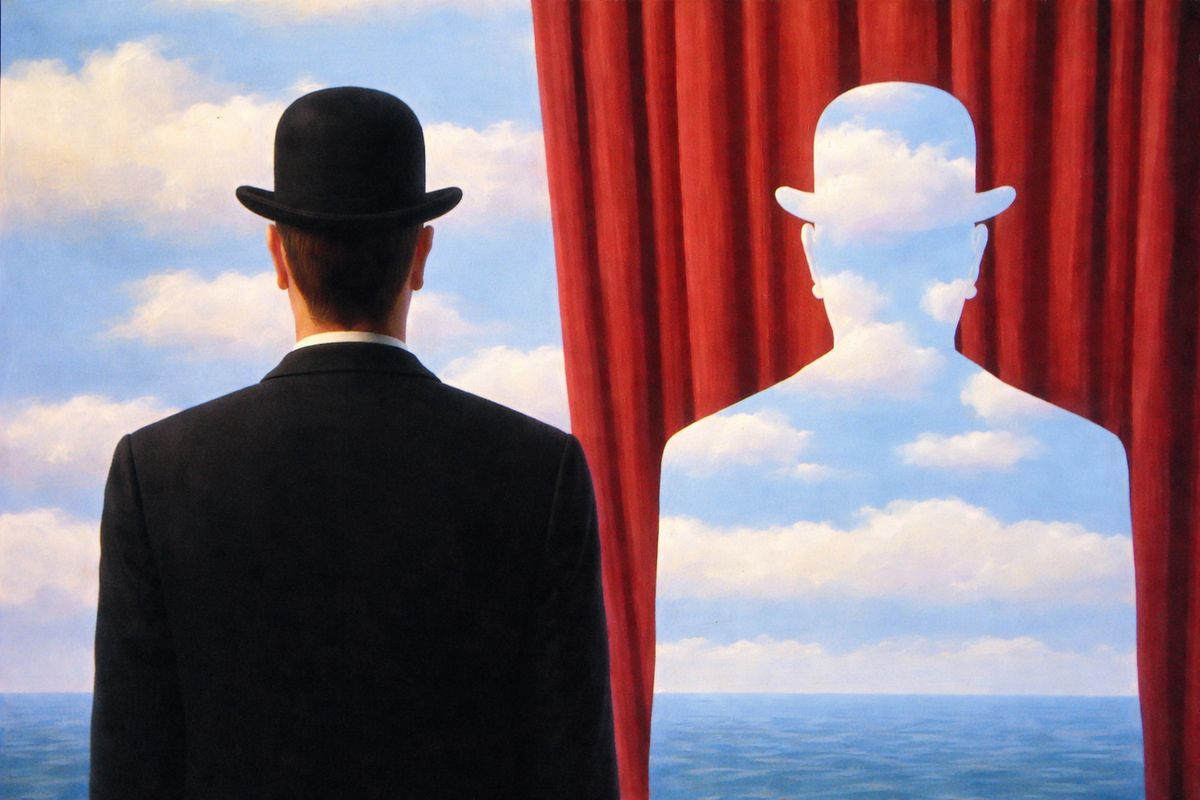
Dualism can lie in that split where the self is pulled between two poles, and identity emerges from how we negotiate the tension.
Neither side is false; both are us.
Descartes called it mind and body, one invisible and thinking, the other flesh and bone.
Religions spoke of it as light and dark, good and evil.
I call it dual lives of an awake mind.
My awake mind began showing up in two faces.
One was alert, aware, and alive in the present.
The other refused to rest, particularly in silence.
When we live between two contrasting modes of being, the tension creates friction, but also insight. Imagine standing at a crossroads, with two paths stretching out before you. Both belong to you, both are true, but they lead in opposite directions.
There were mornings when I woke with a clear and bright mind. The light fell across the wall in a way that made me pause. Coffee curled in the air, and even footsteps on the street sounded like music. That’s my awake sunshine mind.
Then there were mornings when I woke with a weight on my chest I couldn’t name. The world looked the same, but I felt slower, disconnected, restless, circling between thoughts. That’s my restless awake mind.
Since I moved to London, the bubble of expectation I had constructed around myself, that so-called thing I named “my identity,” vanished.
I was no longer imprisoned in my familiar hell, allowing performance to fade away.
By respecting the terms of negotiation, my two selves seemed to find peace. When one wanted to resurface, the other would step back gracefully.
During the summer, a close friend from home visited, and I asked him about the differences between the “home Imi” and the “London Imi.”
He said “home Imi” felt like a kite drifting in whichever direction another pulled, while “London Imi” felt like “just Imi.”
Just me.
However, the harmony I declared soon fractured. Old patterns returned, and I got lost in internal noise that rose from suppression. I felt torn between two versions of myself: one leaning into a quiet harmony with the world, the other stirring agitation, unravelling my sense of direction.
I welcomed one and excluded the other. Inevitably, this imbalance came at a cost.
There are times when the best choice is not to choose at all. I failed to see that when it mattered. While I tried to cling to the sunshine mind, I lost it even more.
Similar to the feast thrown for the newborn princess in Sleeping Beauty where seven fairies were invited to offer blessings of beauty, charm, and grace while one fairy was left out. She was feared and dismissed, but she arrived anyway, furious at being forgotten. Her curse doomed the princess to an eternal sleep while the rest of the world carried on.
When I refused to invite my restless mind to the table, just like that fairy it arrived anyway, sitting down, and laying its curse. My curse was worse than the princess’s. It put the person inside me to sleep, while the restless mind circled endlessly awake.
The fault was mine. I treated one part of me as a blessing and the other as a curse, forgetting they both belong to the same story. The more I denied its existence, the stronger it grew.
What we refuse to invite often becomes the strongest presence in the room.
The state I had refused to allow only expanded until I finally declared depression on Sunday. I opened the door to the unpleasant and gave it the space I had long denied.
Then something shifted.
Its presence remained, but it no longer ruled me. It began to dissolve into air and simply took the seat offered to it.
Nature moves by polarities.
Where there is form, there is counter-form; where one current runs, another returns.
Attention blooms because drift stands beside it.
When I tried to keep only the sunlit half and exile the other, I stepped outside the terms of the world. The restless mind had to arrive. Sanity returned when I let them speak to each other, like themes in a fugue, distinct yet composing one self.
Wholeness is not the absence of unrest, but the recognition of its presence. It is the ability to let every part of myself belong, without allowing any one part to reign.
Identity is not fixed. It is the endless act of returning, each drift followed by a homecoming.
All along, what I was chasing was a kind of perfection, the dream of being untouched by the parts of myself I feared.
And that is exactly why I had to face it.
That was when the compass revealed its secret.
The loss wasn’t a danger, it was an anchor. Marking the collapse of old structures as I find myself in a place where I am forged to rebuild again.
From constructed identity toward something more authentic.
Not loudly or more intense but steadier.
Less proving. Less urgency. More grounded presence.
My yin and my yang finally met, my darkness and my light merged.
The truth is, they were always in a conversation.
Thanks for reading! This post is public so feel free to share it.